Basic Watch Maintenance

Having so many watches we have learnt that with a cheap(ish) set of watch tools we can do many small jobs ourselves.  When you think that some Jewellers will charge £10 upwards, just to change a battery or adjust a metal bracelet, when you have several watches, the cost can soon mount up.

To start off we bought ourselves a cheap set of watch tools from Amazon and then as time passes we have slowly replaced some of those tools with better ones.

Please note; our way of doing things may be different to the professionals and so the information below is offered as a suggestion only.  We are not responsible if following any information below your watch becomes damaged.  If in doubt, take your watch to a professional.

Removing Watch Backs

Screw Backs
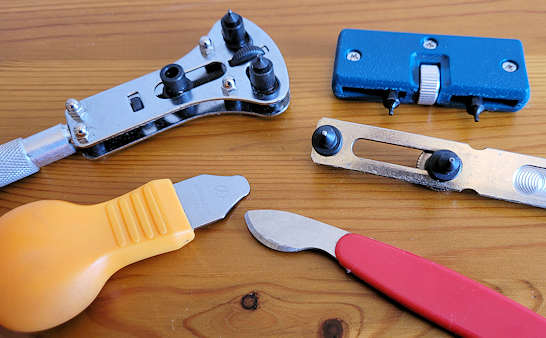
For removing screw backs we found that tools with just 2 points were much more effective that those with three.  That said, three points are useful on a case back that appears to be stuck and will not budge as it offers less chance of slipping.  Fixing a watch into a block also helps to provide more purchase although be sure to put something soft under the watch face for extra protection.  On the whole these basic tools will open most standard size backs although on our Police watch the back was so tight we needed professional help.  Even they struggled and it had to be sent off to have the back loosened.

Pop-Off Backs
For these backs a small blade or lever is the most useful tool although one watch seller I know swears by a 6" Bowie knife.  Never be tempted to use something like a screw driver as if they slip, you will end up with some nasty scratches on the back.  Usually pop off backs have a recess in them somewhere by the lugs that you can insert a tool into.  The back will either come off easily or drive you insane trying to remove it without scratching the back.  Before now I have applied Sellotape to the back of a stubborn back to help protect it should I slip.

Note: When removing backs from water proof watches, look out for a small rubber gasket under the case back and ensure it is put back in situ when reattaching the back.

Snapping the rear case back on

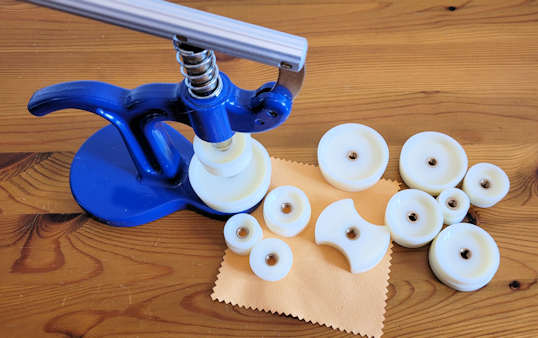
On the whole, when you have a case that snaps on, you can just give it a little bit of pressure with your hand and it will snap on.  There are some watches though that seem to require arms like Arnold Swartzenegger to fit the rear cases and so in these instances a pressing tool is the answer.

One of our watches that needed such a press was the RS Chrono Bayer 795 (2021) watch in which, after making a video on it, we just could not refit the case back.  We therefore purchased our first watch press and inserting the case into the back and fiiting a disc, just slightly smaller than the watch back, we pulled down the handle and the watch back snapped on in seconds.  It really is therefore a very handy tool to have.

Battery Replacements

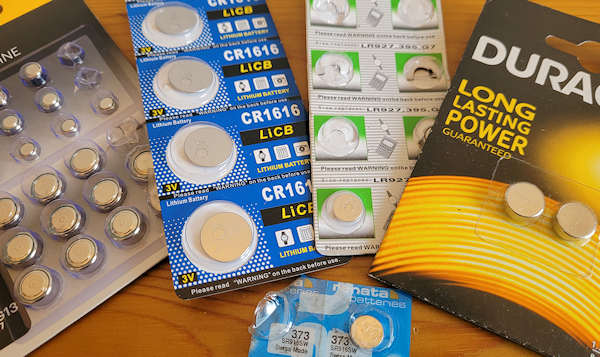
When you have a lot of watches, it can be tempting to pop into these shops that sell everything for £1 and buy a sheet of card containing several batteries.  Whilst this may seem great value and breath life back into the watch, experience has taught us that these batteries are short lived and within a few weeks, or months, of fitting them, they will run out again,  Worst still, some cheap batteries can leak and ruin your watch.  You don't think of small watch batteries leaking but some do and when they do, left unchecked, they can ruin your watch.

If you can get better batteries, it is much more beneficial to buy them but avoid the temptation to buy lots. Even with good batteries, as they sit unused in your drawer week after week they will start to lose power.  We therefore found it best to just by a few and then get more as and when needed.

Adjusting Metal Bracelets

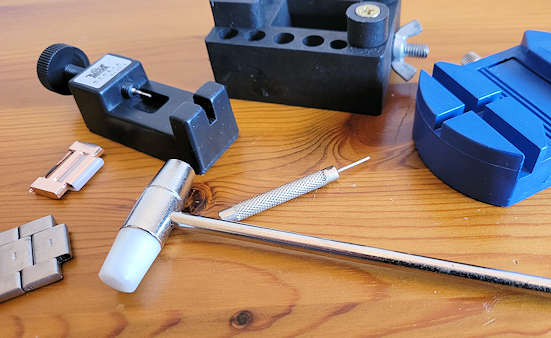
Occasionally, when selling a watch, some manufacturers will provide a little extraction tool for resizing the metal bracelet on a watch so you can add or remove links.  It is worth noting that on many bracelets the pins only come out in one direction, so it you look at the back of the bracelet, quite often, on the links that can be removed, you will see an arrow stamped onto them that shows which side the pins in the bracelet should be pushed out,

Using an extractor you can place the bracelet inside it and then twist the punch, ensuring it is lined up exactly with the pin, to push the pin out of the watch.  Then once it is partially out, the pin can be removed and likewise links added or removed.

We have found with the cheaper extractors the punch that pushes into the bracelet can bend or snap easily.  It is therefore best to buy a better extractor that provides several heads that can be replaced.

Of course this is only one way to remove the pins, another way is to put the watch into a block and then using a small watch hammer and punch, place the punch on the pin and hammer it out
Removing scratches from Stainless Steel

For us, as watches age, they attract scratches and these become part of the watches history although occasionally there are times you want to buff out the scratches on a stainless steel case and take it back to a polished look.

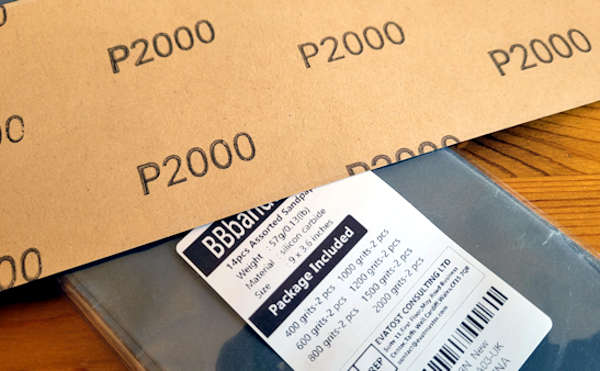
There are a number of ways to do this with sanders etc although we like to do it by hand with sheets of sandpaper. Granted, it does take longer to get the desired result, although we think this way gives us more control over the polishing.

Please note that if you have not tried this before, then please don't attack you most expensive watch with sandpaper, instead find an old battered stainless steel watch case and use that for practice until you are happy with the result.

There are many options for buying mixed sandpaper and generally it is accepted that you start polishing with a 240 grit to 400 grit sandpaper and then move up to a 600 grit sandpaper.  Depending on the finish you want, usually around a 1200 grit sandpaper provides a good result although you can go further to 2000 grit sandpaper to get more of a mirror like finish.

Removing Scatches from the Crystal

The main glass /crystals in watches that seem to pick up scratches the most are those with acrylic on a mineral crystal.

Acylic crystal
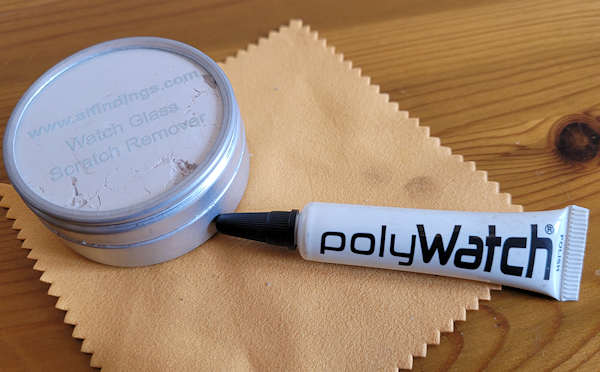
Acrylic crystal, like the glass found on many of our Casio watches, seems to be a softer component that can easily have scratches buffed out with products like Polywatch.  By applying a bit of Polywatch to the watch or to a clean cloth, rubbing the crystal in a circular motion will slowly buff out the scratches.  Our Casio Flip Top had a fairly badly scratched glass and yet with about 30 minutes of rubbing Polywatch into the face, it came up almost like new.  Of course really deep scratches would take much longer and possibly may not be rubbed out completely.

Mineral Crystal
Mineral Crystal glass, for us, requires a lot more work to buff out the scratches. Using a specialised grinding powder, it can take 40 - 50 minutes rubbing the powder (we add a tiny bit of water) into the glass,  It does work, but you have to work at it.

There are those who use tools like a Rimmel Drill with a polisher on the end for such task, which indeed saves time, although we prefer cleaning the scratches away by hand.

Use a tray when dissecting

There are times when you may need to remove little tiny screws from the back of the watch, perhaps to fit a battery or dissect a module for a particular reason.  The screws in the back of watches are tiny and when they suddenly ping out on land on the floor, it takes a long (long) time on your hands and knees to find them.  We know … we have spent hours looking for them.

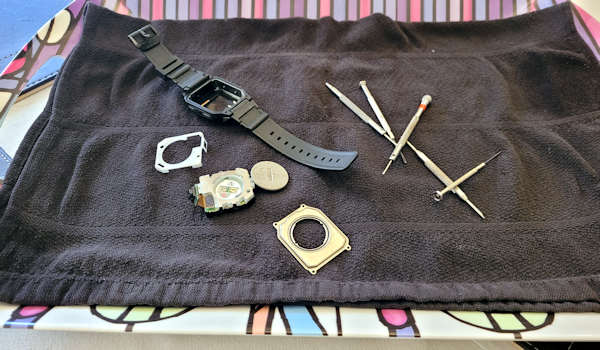
One helpful thing we found was to have a tray on the table top and lay a black tea towel inside it.  We then use that as a work surface, then, 9 times out of 10, if a screw does suddenly go AWOL it lands on the soft towel and just stops dead rather than bounce or roll off some where.  In addition to that, silver screws against a black background are much easier to find and the soft towel ensures everything stays free of scratches.

Removing Watch Pins

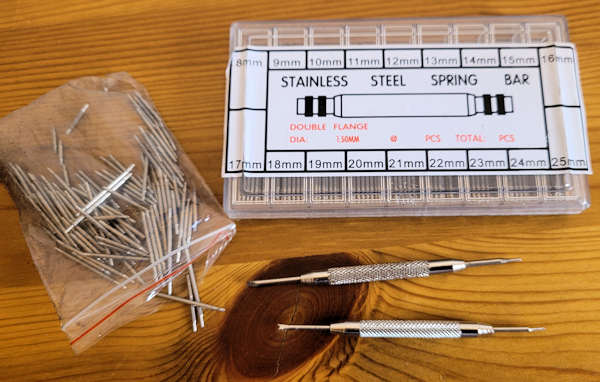
With the wrong tools, removing watch pins can be quite cumbersome, one of the best tools is a watch band strap spring bar remover.  This is a tool that has a V-shaped head one end and a plain rod the other.

The end with the V-shaped head is ideal for most watches and involves pushing the tool into the gap between the watch strap and the case and pushing down on the pin.  The V-head then pushes the spring in the pin down releasing it from the watch.  Likewise, the V-shaped head is also handy for inserting pins back in situ by lining up the pin with the lugs on the case and gently pressing down on the top of the pin into it contracts and locks into place inside the lugs.

The other end of the tool is essentially just a rod and this is handy for watches where the lugs are drilled and have a small hole whereby you insert the rod and just push into the hole until the pin is released.  It is also useful for watches that have quick release mechanisms for releasing the strap from the watch.

Big Eyes!

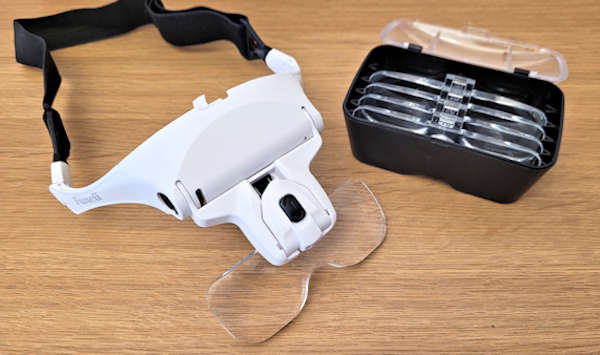
For intricate work (and for older eyes) some sort of head magnifier is an absolute game changer allowing you to precisely locate screws, unclip batteries from modules or view movements close up.  Many come with interchangeable magnifying lenses although we find ourselves using the same one all the time.

Most fit in to ways, either over the ears like glasses, or if you are wearing glasses, fit onto the head with an elasticated strap so you can wear them over glasses.  They can get a little uncomfortable if worn over long periods although they do help immensely.

Modest Watches.com / Harvey P Watches”
Updated: 4th January 2026
© 2018 - 2026 Modest Watches.com / Harvey P Watches. All Rights Reserved.